
Dallas Wrongful Death Lawyer

Brandy Austin Law Firm provides dedicated wrongful death representation for Dallas families who have lost a loved one due to another party’s negligence or misconduct. Under Texas law, eligible claimants include the surviving spouse, children, and parents of the deceased. Recoverable damages may encompass medical expenses, funeral costs, lost future income, loss of companionship, and punitive damages in cases involving gross negligence. The firm manages every stage of the legal process — from investigating the incident and establishing negligence to negotiating settlements and, when necessary, litigating in court. Families must act within the two-year statute of limitations, making timely legal consultation critical.
Compassionate Dallas wrongful death lawyers helping grieving families hold negligent parties accountable. Schedule a free consultation with our firm today.
If you’ve lost a family member because someone else was careless, you’re may be dealing with deep grief and sudden financial strain at the same time. Funeral bills arrive, income disappears, and questions about what happened often go unanswered. Our Dallas, TX wrongful death lawyer can help your family pursue accountability while you focus on healing. Brandy Austin Law Firm, PLLC has represented injured Texans and grieving families for more than a decade. We approach these cases with the patience and persistence they require. When you’re ready, reach out for a free consultation.
Wrongful Death Lawyer Dallas, TX
A wrongful death claim is a civil case brought by surviving family members after someone dies due to another party’s negligence or wrongful conduct. It exists separately from any criminal case the state might pursue. The goal is financial recovery for the family’s losses, not criminal punishment of the person responsible.
Texas law limits who can file a wrongful death suit, generally to the spouse, children, and parents of the person who died. These claims can follow a fatal car crash, a defective product, unsafe property conditions, or a preventable medical error. A Dallas wrongful death attorney investigates how the death happened, identifies who is responsible, and builds the evidence needed to support the claim.

Types of Wrongful Death Cases We Handle in Dallas
Fatal incidents take many forms, and the cause determines how a case is investigated and proven. Our firm handles wrongful death matters arising from a range of accidents across Dallas County. These are the situations we see most often.
- Car accidents. High-speed collisions, drunk drivers, and distracted driving cause some of the most devastating losses on Dallas roads. We work with crash reconstruction and police records to establish who was at fault.
- Truck accidents. Wrecks involving 18-wheelers and commercial trucks often raise serious questions of company liability. We examine driver logs, maintenance history, and the trucking company’s role in the crash.
- Motorcycle accidents. Riders have little protection, so a collision that injures a car driver can be fatal for a motorcyclist. We fight against the assumption that the rider was automatically to blame.
- Bicycle accidents. A cyclist struck by a motor vehicle frequently suffers catastrophic harm. We look closely at driver conduct, roadway design, and visibility to pin down responsibility.
- Pedestrian accidents. People on foot are exposed in crosswalks, parking lots, and along busy streets. Drivers who fail to yield or speed through intersections can cause fatal contact in an instant.
- Slip-and-fall accidents. Property owners owe a duty to keep their premises reasonably safe. When a fall on a dangerous stairway or surface leads to death, premises liability principles come into play.
- Dog attacks. A severe mauling can prove fatal, especially for young children and older adults. We pursue the owners of dangerous animals when their carelessness causes a death.
- Boating accidents. A day on the lake turns tragic when operators drink, speed, or ignore basic safety rules. We handle fatal incidents on local waterways and reservoirs.
- Fatal child injuries. The loss of a child is the hardest case any family faces. We handle these matters with the sensitivity they demand while pursuing full accountability.
Why Choose Brandy Austin Law Firm, PLLC as my Wrongful Death Lawyer in Dallas, TX?
Trial Experience That Carries Weight
Brandy Austin, has practiced law in Texas since 2008 and built this firm from a $300 filing fee into a full-service practice. She has tried cases to verdict and earned recognition as a Rising Star by Super Lawyers from 2015 through 2018, along with a Top 10 Under 40 honor from the National Academy of Personal Injury Attorneys. She is a Fellow of the Texas Bar Foundation and serves as President-Elect of the Tarrant County Trial Lawyers. Over the years, our firm has recovered millions of dollars for injured clients and grieving families.
Knowledge of Dallas Injury Cases
Wrongful death claims overlap heavily with broader injury law, and our personal injury lawyer in Dallas, TX provides a strong foundation for this work. We represent plaintiffs only, which means that our attention stays on those harmed by negligence, never the insurance companies trying to limit what your family recovers.
Dallas Wrongful Death Infographic
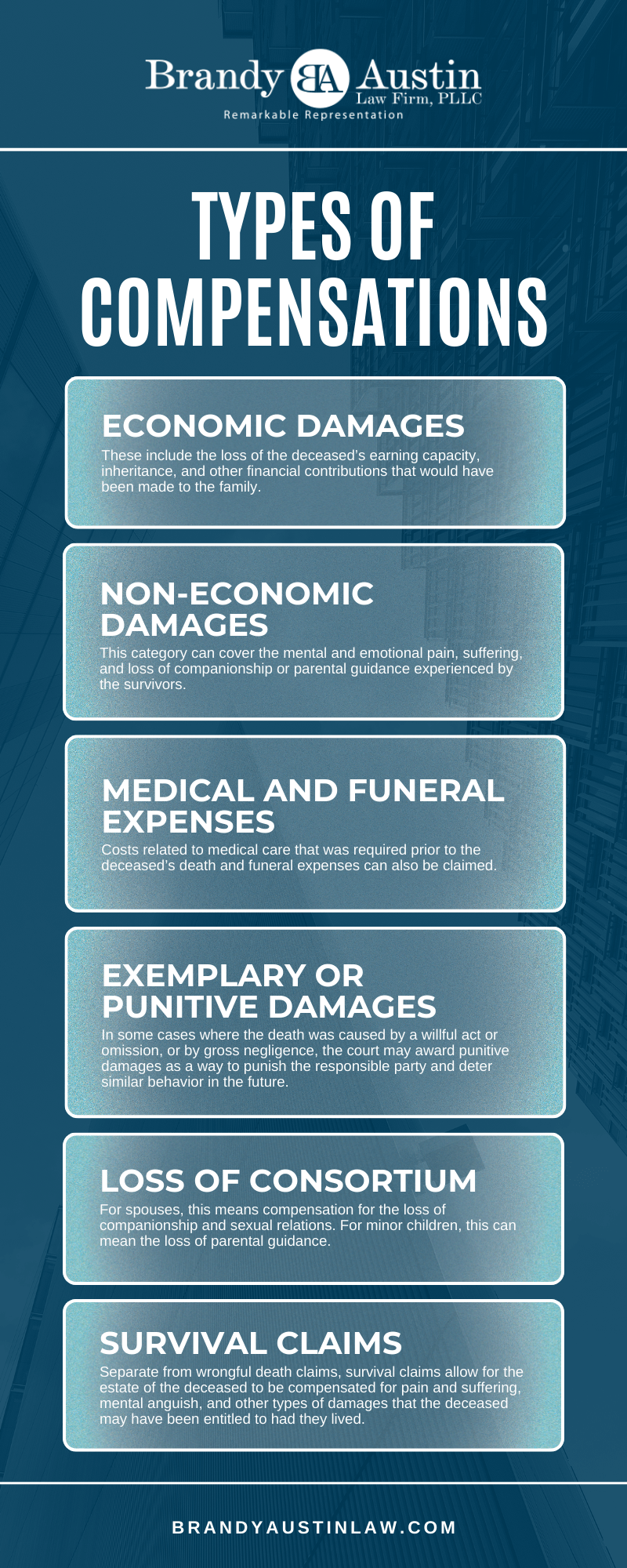
Understanding Wrongful Death Cases
Damages, Liability, and Compensation for Wrongful Death Cases
Texas allows surviving family members to recover for the losses a death causes them. Liability turns on showing that another party’s negligence or wrongful act led to the death. Once that connection is established, compensation in a wrongful death case may cover several categories of damages:
- Lost earning capacity and the financial support the deceased would have provided
- Loss of love, companionship, comfort, and guidance
- Mental anguish suffered by surviving family members
- Lost inheritance the family reasonably expected to receive
- Funeral and burial expenses
A family may also pursue types of compensation through a related survival claim, which covers what the deceased endured before passing. Where the conduct was especially reckless, additional damages can sometimes be available.
Important Aspects of a Wrongful Death Case
A handful of elements tend to decide how a claim unfolds, and each one deserves early attention. Here are important aspects of every wrongful death case:
- Proving negligence. The family must show the at-fault party owed a duty, breached it, and caused the death. Proving fault often depends on preserving evidence before it disappears.
- Identifying every responsible party. More than one person or business may share blame, which affects how much each owes under Texas comparative fault rules.
- Separating the claims. A wrongful death claim and a survival claim compensate different losses, and both may apply to the same incident.
Wrongful Death Case Timeline
No two wrongful death cases proceed at the same pace, but most follow a recognizable path. The general sequence looks like this:
- Initial review of how the death occurred and who may be responsible
- Investigation and collection of records, reports, and witness accounts
- Filing the claim and formally notifying the parties involved
- Discovery, where both sides exchange evidence and take testimony
- Settlement negotiations, followed by trial if a fair resolution isn’t reached
Some claims resolve in a matter of months. Others take much longer, particularly when liability is disputed or several parties are involved.
What to Bring to Your Wrongful Death Consultation
Bringing a few key items helps us evaluate your situation during that first meeting. Gather what you reasonably can, and don’t worry about anything you’re unable to locate yet. We understand that in the midst of emotional grief, it can be difficult to find all of the information you need at this time. If you have it, bring the following:
- Any accident, police, or incident reports
- The death certificate and related medical records
- Photographs, written correspondence, or insurance information
- A timeline of events as you understand them
Expect an empathetic and honest conversation about your options and what the path ahead may realistically look like. We’ll explain how a wrongful death lawsuit works in Texas and answer the questions weighing on you. The consultation costs nothing.
Texas Legal Resources for Wrongful Death Cases
Families researching a claim can review the laws that govern these cases through official Texas sources. The points below are starting places, not legal advice for your specific situation.
- Two-Year Deadline: Texas sets a deadline to file most wrongful death suits, measured from the date of the death.
- Comparative Fault Rule: The state’s rules can reduce or bar recovery based on each party’s share of responsibility.
- Civil Practice Code: The Texas code is where you can read the civil statutes that apply to these claims.
Reach Out to Brandy Austin Law Firm to Schedule a Consultation
When you’re ready to talk about what happened to your loved one, our team at Brandy Austin Law Firm, PLLC is here to listen. A wrongful death consultation with our firm is free, and there’s no pressure to decide whether you move forward. We’ll assess what happened, explain your options under Texas law, and answer any questions you may have. Contact us to schedule a time that works for you.